What Is Conversion Rate Optimization — And Why It Beats Buying More Traffic
Most small businesses try to grow the same way: get more people to the website. More ads, more SEO, more posts. That works, but it's the expensive way to grow, because every new visitor costs money or time. Conversion rate optimization — CRO — is the other lever. It's the practice of getting more customers out of the visitors you already have, by finding where people drop off and fixing it. It's the reason we treat web design as a sales tool rather than a brochure, and it's the cheapest growth most owners aren't buying.
This post explains what CRO actually is, the math that makes it worth your attention, and how to do a useful version of it without a testing budget. If you haven't read it yet, our guide on what a small-business website needs to convert covers the building blocks; this one is about measuring and improving them once the site is live.
First, What Counts as a Conversion?
A conversion is any action a visitor takes that your business actually wants. For a service business, that's usually a booked call, a submitted form, or a tap on your phone number. For a store, it's a purchase. For a gym, it's a trial signup. It can also be a smaller step that leads to the big one — downloading a price list, starting a chat, watching a demo — as long as you're honest that those are steps, not sales.
Your conversion rate is just the percentage of visitors who take that action. A hundred people visit your site this week, three of them book a call — that's a 3% conversion rate. The number itself matters less than the trend, and it only means anything if you've decided what "conversion" means for you before you start counting.
The Math — Why a Small Lift Beats More Traffic
Say your site gets 1,000 visitors a month and converts 2% of them into leads. That's 20 leads. Now you have two options. Option one: double your traffic to 2,000 visitors. Depending on your market, that's a real budget — our breakdown of what Google Ads cost shows how quickly clicks add up — and it gets you to 40 leads. Option two: leave traffic exactly where it is and move the conversion rate from 2% to 3%. That's 30 leads, a 50% increase, for the cost of fixing your site.
Here's the part that makes CRO compound. Once the site converts at 3%, every dollar you spend on paid ads or SEO afterward is worth half again as much, because more of the traffic it brings turns into customers. Traffic without conversion is a leaky bucket. CRO is patching the bucket before you turn up the tap.
Step 1 — Measure Before You Touch Anything
You can't improve a number you're not tracking, and most small-business sites aren't tracking it. The fix is to set up your conversions as key events in Google Analytics 4 — form submissions, phone taps, booking confirmations, purchases — so you can see how many visitors take each action and which pages they came from. If that sounds like a project, it is a small one, and it's exactly what our marketing analytics work sets up first, because nothing else in this post is possible without it.
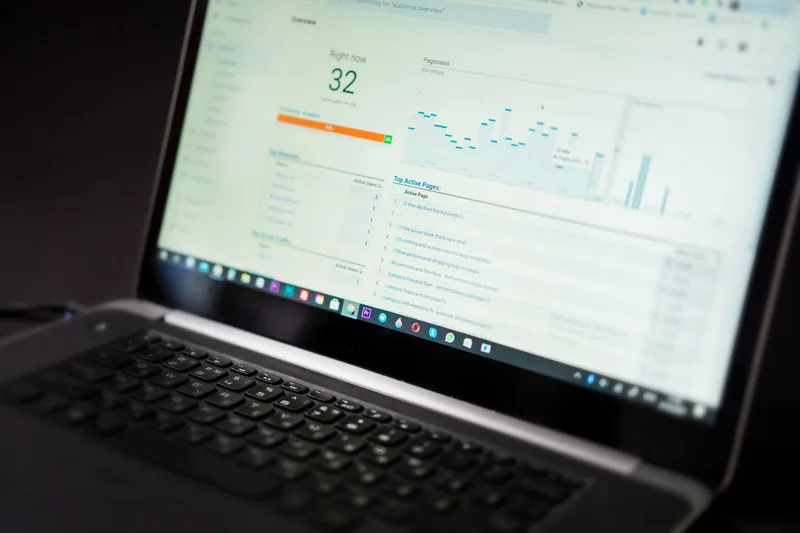
Give it two to four weeks of data. Then write down your baseline: total visitors, total conversions, the rate, and the two or three pages that get the most traffic. That's your starting line. Any change you make from here gets judged against it.
Step 2 — Find Where People Leave
Now look for the gap between traffic and action. The pattern is almost always the same: one or two pages get most of the visitors, and they convert worse than the rest of the site. Common culprits, in the order we usually find them:
- The page loads slowly on a phone. Visitors leave before they see your offer. Check your top pages in PageSpeed Insights; if they're failing on mobile, start with making your website faster — it's the single fix that helps everything else.
- The visitor can't tell what you do in five seconds. The headline is clever instead of clear, or it's about you instead of about them.
- There's no obvious next step. Three buttons competing for attention, or the only contact option is a form buried at the bottom.
- The form asks too much. Eight fields for a quote request when three would do.
- Nothing proves you're real. No reviews, no photos of your actual team or work, no results — just stock imagery and adjectives.

Walk through your own site on your own phone as if you were a customer. Try to book, call, and buy. Note every moment you hesitate. Those moments are your CRO to-do list, and you found them for free.
Step 3 — The Fixes That Usually Win
CRO has a reputation for button-colour tests. In our experience the wins for a small business are bigger and more boring than that:
- One clear headline that says what you do, for whom, and where. "Mobile sports massage in Orange County" beats "Move Better. Live Better."
- One primary call to action, repeated. Book a call, get a quote, start a trial — pick one and put it above the fold, mid-page, and at the end.
- Click-to-call on mobile. If your customers phone you, the number should be a tap, not a copy-paste.
- Shorter forms. Ask for what you need to follow up — name, phone or email, one qualifying question. Get the rest on the call.
- Proof near the ask. Put your best review, a real photo, or a result right next to the button, not on a separate testimonials page nobody visits.
- Speed. Already covered, still the biggest one.
None of these need a designer or a budget. Most can be done in an afternoon. Do the easy ones first, then re-measure.
Step 4 — Change One Thing at a Time
Here's where CRO advice written for big companies falls apart for small ones. Proper A/B testing — showing two versions of a page to split traffic and measuring which wins — needs thousands of visitors per version before the result means anything. If your site gets 800 visits a month, a formal split test will take most of a year to tell you something you could have guessed.
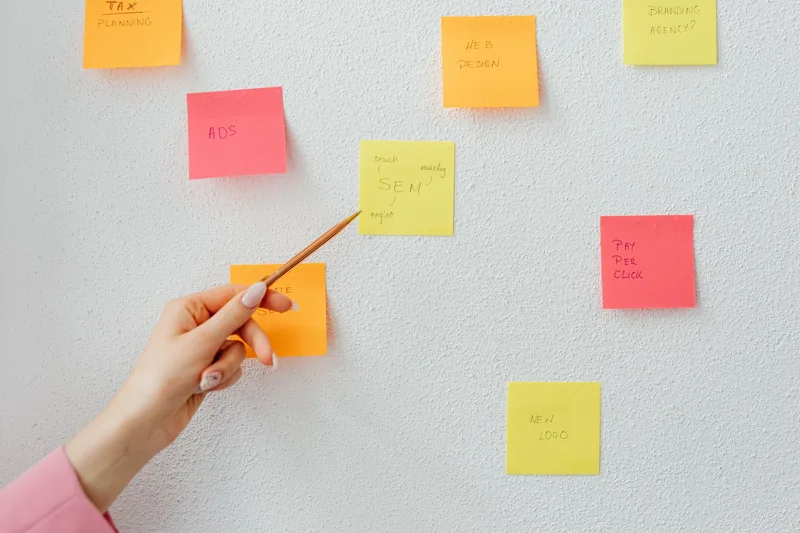
The honest version for a small business is before-and-after. Make one meaningful change, leave it alone for three or four weeks, and compare the conversion rate to your baseline. Then make the next one. It's slower than a lab, but it's free, it's real, and changing one thing at a time means you actually learn what worked. Changing five things at once and seeing the number move teaches you nothing.
When CRO Means a Redesign
Sometimes you run through all of this and the honest conclusion is that the site can't be patched. The platform is slow no matter what you do, the layout fights every change, or it was built to look good for the owner rather than to work for the customer. That's the point where CRO turns into a website redesign — and if you've done the measuring first, it's a redesign with a brief: you know exactly which pages matter, what visitors are trying to do, and where the current site loses them. Every site in the work we've done started with that question, not with a colour palette.
The order matters. Measure, find the leaks, fix the cheap ones, then decide whether you need a rebuild. Owners who start with the rebuild usually end up with a prettier version of the same leaks.
Frequently Asked Questions
Want to know where your site is leaking customers?
Book a free 30-minute call. We'll look at your traffic, your top pages and your conversion paths, and tell you the two or three fixes that would get more customers out of the visitors you already have.
Book a Free Website Review