What Your Website Needs to Convert — A Small-Business Guide
Most small-business websites have the same problem: they get visitors and do nothing with them. People land, glance around, and leave — no call, no form, no sale. A website that converts is different. It's not about looking expensive; it's about guiding a visitor from "just looking" to "let's do this." Here's what a small-business website actually needs to turn traffic into customers — the things we build into every website we design.
What "Converting" Actually Means
Converting just means getting the visitor to take the action that matters to your business — book a call, fill out a form, buy something, or pick up the phone. A pretty site that doesn't drive those actions is a brochure. A converting site is a salesperson that works around the clock: it qualifies, persuades, and closes while you're busy running the business. The ongoing work of measuring and improving that rate is called conversion rate optimization, and it's how you get more customers out of the traffic you already have.
The 6 Things a Converting Website Needs
1. A clear value proposition — instantly
A visitor should know who you are, what you do, and who it's for within about five seconds of landing. Lead with the outcome you deliver, not a vague slogan. If they have to dig to figure out whether you're right for them, they're gone.
2. Speed and a mobile-first layout
Most of your visitors are on a phone, and a slow site loses them before it ever makes its case. Fast load times and a clean mobile layout aren't nice-to-haves — they're table stakes, and they're also a big part of getting found on Google in the first place. If yours is dragging, our guide to how to make your website faster covers how to measure it and the five things usually to blame.

3. One obvious next step
Every page should make the next move obvious — one primary call to action, repeated, that doesn't make the visitor hunt. "Book a free call." "Get a quote." Pick the one action you want most and point everything at it.
4. Proof you can be trusted
People buy from businesses they trust. Reviews, real photos of your team and work, results, and recognizable logos do more for conversion than any amount of polish. Show that other people like them already chose you.
5. Friction-free contact
Every extra field, click, or step between "I'm interested" and "I reached out" costs you leads. Short forms, click-to-call on mobile, and online booking remove the friction that quietly kills conversions.
6. Built to be found, not just seen
A converting site still needs traffic to convert. The best-designed page in the world earns nothing if no one reaches it — which is why we build sites to rank, and why every business owner should understand the basics of SEO for small business.
Looking Good ≠ Converting
This is the trap small businesses fall into: they judge a website by how it looks instead of what it does. A gorgeous site that buries its CTA, loads slowly, and makes people think will lose every time to a plain one that's fast, clear, and easy to act on. Design should serve conversion — guide the eye to the next step — not show off at its expense.

What a Converting Site Looks Like
Take Massage & Movement, a local therapist whose site we rebuilt. Clear offer up top, fast and mobile-first, trust built in, and booking just a tap away — a small-business site designed to turn visitors into appointments:
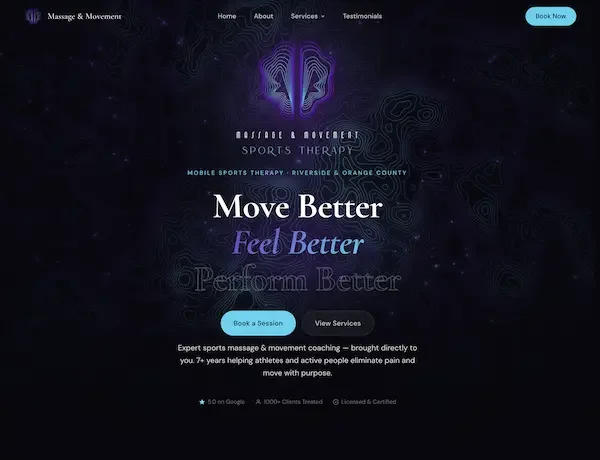
Same playbook works for any small business. You can see more of what that looks like across industries on our work page.
Frequently Asked Questions
Want a website that actually converts?
We'll review your current site — speed, messaging, mobile, and conversion paths — and show you exactly what's costing you customers. Free, no commitment.
Book a Free Website Review