
TikTok Ads for Small Business — Are They Worth It in 2026?
Every year a few clients ask the same question, usually after watching a competitor's video do numbers: should we be running TikTok ads? It's a fair question with an annoying answer — sometimes, and it depends less on your budget than on whether you can make video. That's the part the platform's own sales pitch skips, and it's the part that decides whether the money works. Here's how we'd think it through before spending a dollar of a paid ads budget there.
Short version: TikTok is genuinely the cheapest reach available to a small business right now, and it is also the least forgiving place to run a bad ad. Most owners should get Facebook and Instagram ads profitable first and treat TikTok as the second channel, not the first. But "second" isn't "never," and for some businesses it's the better buy. Let's do the math and the honest caveats.
Who's Actually on TikTok Now
The "it's just teenagers" objection is out of date, and it's usually the reason an owner dismisses the channel without looking. The user base has aged up considerably — the app is now a normal part of the day for people in their thirties and forties, and it's increasingly used the way people used to use Google: to look things up. "Best pre-workout," "how much does a bathroom remodel cost," "coffee shop near me" — those searches happen inside TikTok now, on video results.
What hasn't changed is the mindset. Nobody opens TikTok to buy. They open it to be entertained, which means your ad is interrupting something, not answering a question. That's the fundamental difference from search, and it drives everything else on this page — including why so many small businesses light money on fire in their first month.

What TikTok Ads Actually Cost
There's a floor here that catches people out, and it isn't a guideline — it's enforced in the ad platform. Per TikTok's own budget documentation, a daily budget at the campaign level must exceed $50, and at the ad group level it must exceed $20. You cannot dip a toe in at ten dollars a day the way you can on Meta.
Stack a real test on top of that floor and the number gets concrete. You need enough consecutive days for the system to get out of its learning phase and enough volume to tell a good video from a lucky one — call it three to four weeks. That's roughly $1,500 to $2,000 for a first honest test. What you pay per click or per lead on top of that varies wildly by industry and, more than anything, by how good the video is, which is why we'd rather talk about the test budget than quote a CPC. If you want the same treatment for the other big channel, how much Google Ads cost breaks the numbers down the same way.
Two more things from that same documentation worth knowing before you launch. Your campaign budget should never sit below your ad group budget — it causes delivery problems. And you can't switch between daily and lifetime budgets once a campaign is live, so pick correctly the first time. Daily for anything ongoing; lifetime only for a fixed-window promotion.

The Creative Is the Targeting
This is the sentence to take away. On Meta and Google you win largely by pointing the machine at the right people. On TikTok, the algorithm finds the audience for you based on who engages — so the video itself is doing the targeting work. A great ad shown to a broad audience will outperform a mediocre ad shown to a perfectly-built one, consistently and by a lot.
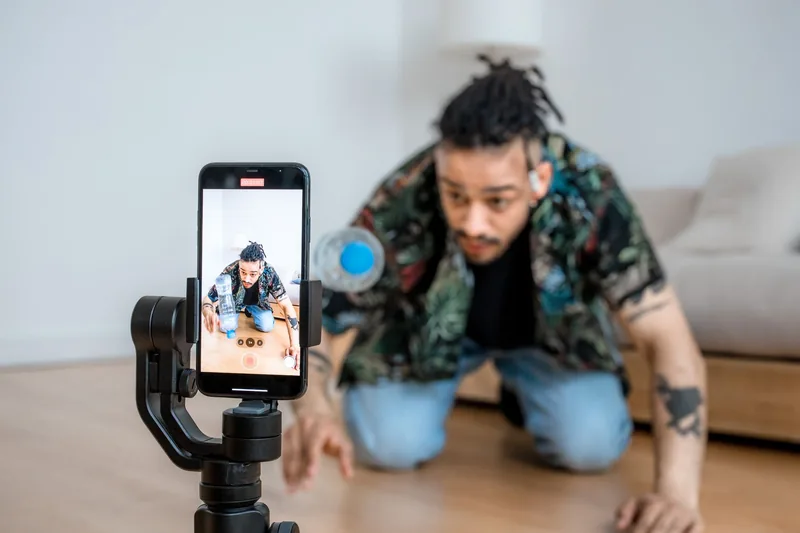
Which means the practical requirement isn't budget, it's a repeatable way to make short-form video. Not a production. Phone footage, one idea, hook in the first two seconds, and something that looks like the feed rather than a commercial. If you already post organically, Spark Ads let you put spend behind an actual post — yours, or a creator's with their authorization — and in our experience the post that already earned attention organically is the one worth boosting. The same logic makes user-generated content disproportionately valuable here: a customer holding your product beats a studio shot of it.
Plan on three to five video variations per test, not one, and plan on replacing them. Creative burns out faster on TikTok than anywhere else — a winner can go stale in two weeks. If making video regularly sounds like a problem you don't have a solution for, that's a real answer: fix the content engine with social media and content first, then buy ads on top of it.
Who It Works For — and Who Should Skip It
We'd say yes to TikTok ads for a business that's visual, impulse-friendly, and broad. Products you can show working. Food, apparel, skincare, supplements, anything with a satisfying before-and-after. Gyms, studios, med spas, salons — places where the transformation is the ad. Ecommerce with an order value low enough that someone buys off a video without a week of research.
We'd say no, or not yet, to the opposite profile. B2B with a long sales cycle and a small buying committee — B2B lead generation money goes further on LinkedIn and search. High-consideration purchases where nobody decides from a phone in bed. And any business whose service area is a handful of zip codes: TikTok can target by location, but its edge is cheap broad reach, and paying for reach you can't serve is just paying for reach. If you're local and urgent — emergency plumbing, dentistry, a tow truck — put the money in local search and search ads and revisit this later.
The middle case is the common one: you're a decent fit, but you're not running Meta well yet. Then the order matters. Get Instagram ads working, build the audience and the tracking, and bring TikTok in once you've got video you're proud of and a channel that already pays.
How to Test It Without Wasting Money
If you're in, run it as an actual experiment rather than an open tab. Here's the version we'd run.
- Set the window and the number before you start. Thirty days, a fixed total, and the one metric that decides it — cost per lead or cost per purchase, not views.
- Install the TikTok pixel and events API first, not after. Untracked spend isn't a test, it's a donation. Same rule as every other channel.
- Start broad. Let the algorithm do what it's good at. Stacking interest targeting on a small budget starves delivery.
- Ship 3–5 creatives, then keep shipping. Kill the losers weekly, refresh the winners before they fatigue.
- Send traffic somewhere that converts. A slow, cluttered page wastes the cheapest traffic you'll ever buy — the same short list in a website that actually converts applies here, only harsher, because this visitor has less patience than a searcher.
- Don't judge it on last-click alone. TikTok is an interruption channel; a share of the sales it creates arrive later through search or direct. Retargeting those viewers on Meta is usually where the cheap conversions actually land.
Then Actually Read the Result
Judge it on booked revenue, not on the platform's reported conversions — every ad platform grades its own homework and TikTok is no exception. Look at what your total customer acquisition cost did across all channels during the test window, and whether direct traffic and branded search went up while the ads ran. That's usually where a working TikTok campaign shows up first, and it's invisible if you only read the ads dashboard. Getting that view is what marketing analytics is for, and the work we've done shows what it looks like when the tracking is connected properly.
One last thing worth saying out loud: TikTok has spent years as a political football, and the ownership question has been through more than one round. That's not a reason to avoid it. It is a reason to treat it as rented ground — build the email list, the customer list and the website traffic that you keep, and let any single platform be an accelerant rather than the foundation.
Frequently Asked Questions
Not sure TikTok is where your next dollar should go?
Book a free 30-minute call. We'll look at what you're running now, what your customers actually respond to, and which channel would pay for itself first — then tell you straight, even if the answer is "not TikTok."
Book a Free Paid Ads Call