Short-Form Video — How to Use Reels, TikTok and Shorts to Grow a Business
Short-form video is the one format that puts a small business in front of people who have never heard of it. Reels, TikToks and YouTube Shorts get pushed to strangers by default — that's the whole design of those feeds. A static post reaches the followers you already have. A thirty-second clip can reach the neighborhood. It's why video sits at the center of nearly every social media and content engagement we run now, and why owners who keep putting it off are leaving free reach on the table.
It's also the format owners avoid most, because it feels like it needs a creator, a ring light and a personality. It doesn't. Here's how short-form video actually works for a small business: where to start, what to film when you're not a creator, how to make one clip do three jobs, and how to tell whether any of it is working. If you're still choosing platforms at all, our playbook on social media marketing for small business comes first — this is the video chapter.
Why Short-Form Video Reaches People Nothing Else Does
Every other post type is distributed mostly to followers. Short video is distributed by interest. TikTok, Reels and Shorts all run on the same logic: the platform shows your clip to a small batch of people, watches how they react, and shows it to more if they stick around. Follower count barely enters into it. A business with 300 followers can put a clip in front of 30,000 people if the first few seconds earn the watch.
The audience is there, and it isn't just teenagers. Per Pew Research Center's social media fact sheet, 63% of U.S. adults under 30 use TikTok — and so do 44% of 30-to-49-year-olds, the age band that owns homes, has kids in youth sports and signs up for gym memberships. YouTube reaches 85% of adults aged 50 to 64.
What that means in practice: short-form video is the cheapest discovery channel a small business has. Not the easiest — the cheapest.

Reels vs TikTok vs Shorts — Where to Start
Pick one platform as home base. The platform you check every day is the one you'll actually post to.
Instagram Reels is the default for most local and service businesses. Your customers are probably already following you there, Reels get shown to non-followers, and one good clip feeds your profile, your Stories and your grid at once. If you've built an Instagram marketing strategy, Reels are the reach engine inside it.
TikTok is where a clip travels furthest on the smallest following. If your product is visual, your service is satisfying to watch, or you're comfortable talking to a camera, start here. It's also the hardest platform to sustain — the feed moves fast and forgets fast.
YouTube Shorts is the one owners skip, and it's the one with the longest shelf life. Shorts show up in YouTube search and in Google results, so a clip answering "how much does a kitchen remodel cost" can keep getting found for months instead of hours. If people search for what you do before they buy it, Shorts deserve a slot.
The honest answer for most small businesses: home base on Instagram, post the same clip to TikTok and Shorts, and watch where it performs. The platforms tell you within a month.
What to Film When You're Not a Creator
The clips that work for a small business are not the clips that work for an influencer. You're not entertaining strangers — you're showing people what it's like to buy from you. That's a much lower bar, and it's one you clear every day already. Five formats that work almost anywhere:
- The process. The thing you do, filmed while you do it. A detailer's foam cannon, a chef's plating, a trainer's warm-up. Satisfying to watch, zero script.
- The answer. Take the question customers ask most and answer it to the camera in twenty seconds. This is the format that gets found on Shorts and in Google.
- The before-and-after. Two clips, one cut. Works for every service that changes how something looks or works.
- The behind-the-scenes. Opening the shop, prepping for a class, unboxing stock. People buy from businesses that feel real, and this is what real looks like.
- The customer. A regular saying why they come back, or a clip a customer already filmed and tagged you in. That's user-generated content, and it converts better than anything you make yourself.
Notice what's missing: dancing, trends, and anything you'd feel stupid doing. Trends are optional. A plain clip of you doing your actual job outperforms a forced trend nearly every time, because your job is the thing the viewer is trying to decide about.
How to Make One That Actually Works
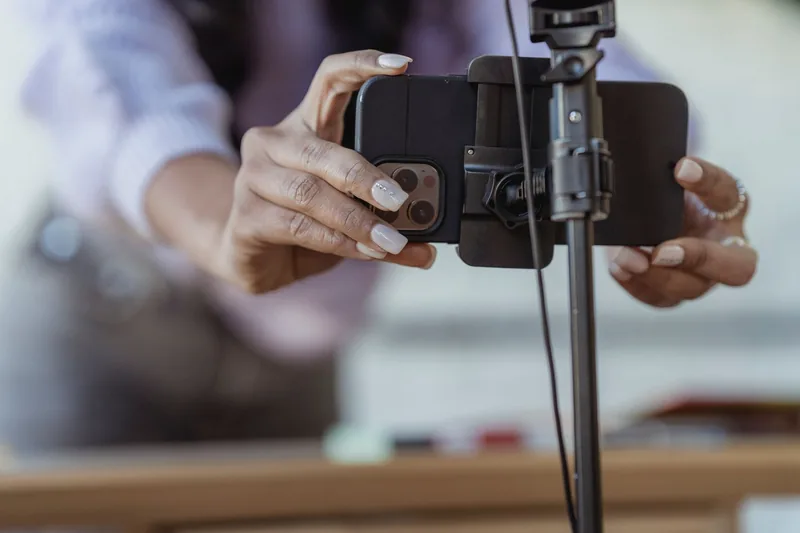
Gear is not the problem. A phone from the last four years shoots better video than the cameras agencies used a decade ago. The problems are all in the first three seconds and the last thirty.
Earn the first two seconds. Start on the action or the answer, not on "hey guys." The viewer decides whether to keep watching before you've finished saying hello. Open with the foam hitting the car, the question on screen, the "after" shot.
Shoot vertical. 9:16, full frame. A landscape video with black bars is the fastest way to signal that this was made for somewhere else.
Put the words on screen. Most people watch with the sound off, at least at first. Auto-captions are built into every platform now — turn them on, then check the spelling of your own business name.
Keep it between fifteen and forty-five seconds. Long enough to say one thing, short enough that most viewers reach the end. Completion rate is the metric the algorithms care about most, and a tight thirty seconds beats a rambling ninety every time.
Post it natively. Upload directly to each platform rather than sharing a TikTok link to Instagram. Reels carrying another app's watermark get less reach.
One Clip, Three Places — And Then a Fourth
Filming is the expensive part. Posting is nearly free. So the rule is film once, publish everywhere, and squeeze the good ones.
The same vertical clip goes to Reels, TikTok and Shorts on the same day. Strip the watermark, upload native, change the caption slightly for each. That alone triples your reach for about four extra minutes of work.
Then the fourth place: the clips that perform become paid ads. When a video has already proven it holds attention for free, putting budget behind it is the lowest-risk ad spend you'll make. In our experience the ad that looks like a post usually outperforms the ad that looks like an ad, and this is the cheapest way to make one. On TikTok that's not just a style preference — it's how the targeting works, which is the whole argument in our guide to TikTok ads for small business.
And the transcript is a blog post. Answer a question on camera, pull the auto-generated transcript, and clean it into a written version for your site. The video earns reach; the article earns search traffic for the same idea. That's the one-idea-five-places system from our content marketing starter plan, and the tools covered in AI content creation turn the transcript-to-draft step from an afternoon into minutes.
How Often to Post, and How to Tell If It's Working
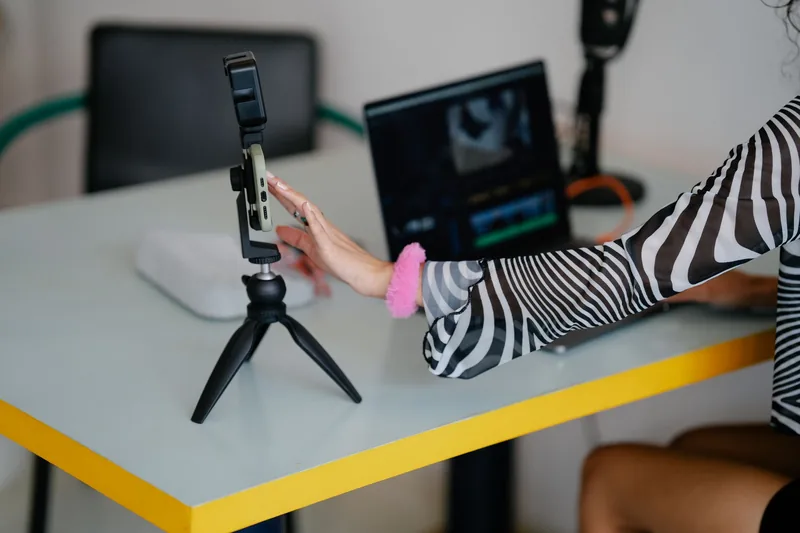
Three to four clips a week is the pace that moves an account without eating your week. Batch them: one afternoon a month with the phone on a tripod can produce a dozen. What kills most accounts isn't posting too little — it's posting daily for two weeks, burning out, and vanishing. For the full picture across every platform, not just video, see our guide on how often to post on social media.
Ignore likes. The numbers that matter for a small business are:
- Reach from non-followers. Every platform reports it. This is the whole point of the format — if the number is low, the first two seconds aren't working.
- Completion rate and average watch time. Are people reaching the end? If they drop off at second five, cut harder.
- Profile visits and link clicks. Reach is worthless if nobody looks you up. A clip that gets 5,000 views and 80 profile visits beats one that gets 50,000 views and 12.
- DMs, calls and bookings. The only number the business actually runs on. Ask new customers where they found you, and write it down.
That last one depends on where you send people. A viewer who taps through to a slow site with no clear next step is a viewer you earned and then lost — the video is only half the funnel, and a website that converts is the other half. The work we've done shows what connecting the two looks like across a few industries. And when the views live in one app and the bookings live in another, proper marketing analytics is how you find out which clip actually paid for itself.
Frequently Asked Questions
Want short-form video that brings in customers, not just views?
Book a free 30-minute call. We'll look at your platforms, what you could be filming, and where the clips should send people — then tell you straight what would actually move the needle. No pitch deck, just a real conversation.
Book a Free Social Media Call