How Local SEO Works — And Why It Beats Ads for Local Businesses
When someone nearby pulls out their phone and types "plumber near me" or "best gym in town," Google decides in milliseconds which handful of businesses to put in front of them. Local SEO is how you become one of those businesses. It's the practice of getting your company to show up — in Google's map pack, in the local organic results, and on Google Maps — exactly when nearby customers are searching for what you sell.
For a local business, it's the highest-intent, lowest-cost channel there is — the person searching already wants what you offer and is ready to act. It's the foundation of nearly every engagement in our SEO services, so here's how local SEO actually works, the three levers that move the needle, and why — dollar for dollar — it usually beats paid ads.
What Local SEO Actually Is
Run a local search and you'll see two prime pieces of real estate. First, the map pack — the map plus the top three businesses Google trusts most for that query. Below it, the local organic results — the regular blue links. Local SEO is the work of earning a spot in both, and you can see it play out in the results we've driven for local clients.
It's different from regular SEO because Google weighs three extra signals for local queries: proximity (how close you are to the searcher), relevance (how well you match what they typed), and prominence (how established and trusted your business looks online). Get those right and you show up for the "near me" searches that drive walk-ins, calls, and bookings.

The 3 Levers That Move Local Rankings
1. Your Google Business Profile
This is the single biggest factor in local SEO. Your Google Business Profile (the listing that shows up in the map pack and on Maps) needs to be claimed, fully filled out, correctly categorized, and active — with accurate hours, services, photos, and regular posts. Keep your name, address, and phone number identical everywhere they appear online. A complete, well-tended profile is what gets you into that top-three map pack. Our step-by-step guide to Google Business Profile optimization walks through every field worth filling in and the order to work through them.

2. On-Page & Local Relevance
Your website still matters — a lot. Google reads your pages to confirm what you do and where you do it. That means clear service pages, your city and service area worked naturally into your copy and headings, location schema in your code, and dedicated pages when you serve more than one area. It's exactly the kind of structure we build in our web design and SEO work — the difference between Google guessing you're relevant and knowing it.
3. Reviews & Citations
Reviews are both a ranking signal and a conversion engine. Volume, recency, and how you respond all matter — a steady stream of recent reviews beats a pile of old ones. Reviews are also a form of user-generated content — the customer photos, videos, and posts that build trust faster than any ad. Pair that with consistent citations (your business listed accurately across directories like Yelp, Apple Maps, and industry sites) and you build the "prominence" Google rewards.

Local SEO vs. Paid Ads
We run paid ads for plenty of clients, so this isn't anti-ads — it's about where each one wins. Ads buy you instant visibility, which is great for a launch or a slow season. But the moment you stop paying, the traffic stops; you're renting it.
Local SEO compounds. The map-pack spot and the rankings you earn keep sending you clicks every single day, for free, long after the work is done. For most local businesses the smartest play is both: ads for the quick win while local SEO builds the durable base that lowers your cost per customer over time. (Our guide to Google Ads vs SEO covers which one to fund first.)
What Real Local SEO Results Look Like
Take Hyperwolf, a cannabis delivery brand we work with. Delivery is about as hyper-local as it gets — every city they serve is its own "weed delivery near me" search. We built out their delivery and location pages and ran a local SEO strategy around them, and their organic search traffic climbed steadily across the year:
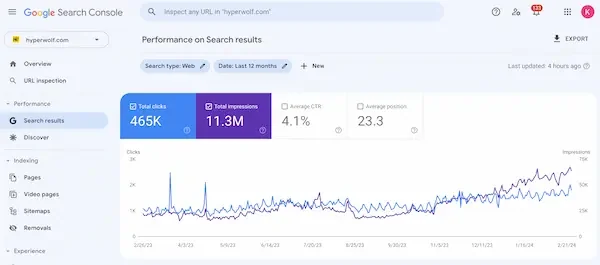
It's the same story for service businesses. We helped a Riverside-area massage therapist get found for the local searches that actually book appointments. Different industries, same engine: show Google you're the most relevant nearby option, and it sends you the customers.
How Long Does Local SEO Take?
Google Business Profile improvements can show in a few weeks. Real ranking movement in the map pack and local results usually takes three to six months — and unlike an ad budget, it keeps building from there. Local SEO is a compounding asset, not a faucet you pay to keep running.
Frequently Asked Questions
Want to show up when local customers search?
We'll audit your local SEO — your Google Business Profile, your rankings, and your competitors — and show you exactly where the opportunity is. Free, no commitment.
Book a Free Local SEO Audit