Segmented Win-Back Campaigns
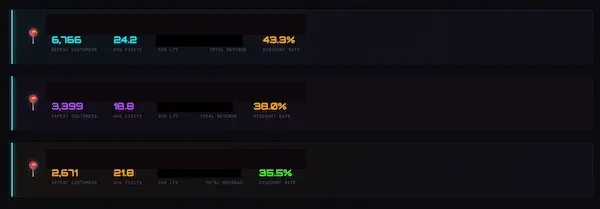
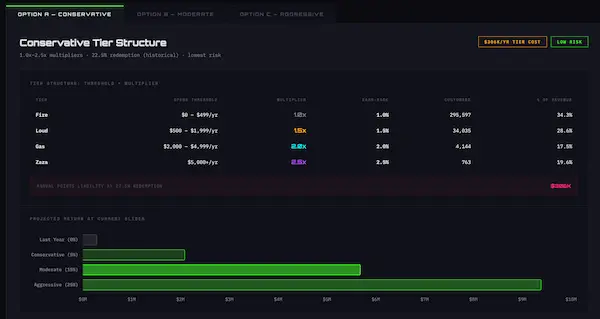
In March + April we noticed in the data: a big discrepancy between inland stores and stores near the border. Different purchase behavior, different AOVs, different lapse patterns. So we split them, set different minimum-spend thresholds matched to each location's actual behavior, and tiered the discount by days lapsed. The result was a step-change in revenue.
Before · The Old Win-Back (Generic, One-Size-Fits-All)

October · $7K revenue

December · "$10 off" blanket · $19K revenue

January · "$20 off" blanket · $21K revenue
After · The Segmented Win-Back Results

March · segmented + tiered · $105,851 revenue · 1,639 conversions

April · segmented + tiered · $126,584 revenue · 2,004 conversions
After · Border Stores (New Buffalo, Monroe) · Tiered by Lapse

Tier 1 · $10 off · Min $30 purchase

Tier 2 · $15 off · Min $35 purchase

Tier 3 · $30 off · Min $75 purchase
After · Inland Stores (Detroit, Mt. Morris, Mt. Pleasant, Vassar) · Tiered by Lapse

Tier 1 · $10 off · Min $30 purchase

Tier 2 · $15 off · Min $35 purchase

Tier 3 · $20 off · Final call
Before · Blanket Win-Back
Avg. revenue / campaign$15,868
Conversions / campaign219
Conversion rate1.17%
Revenue per send$0.84
Open rate15.5%
Avg. ROI$15,835
After · Segmented + Tiered Win-Back
March revenue$105,851
April revenue$126,584
Conversions (March)1,639
Revenue per send$0.43–$0.50
Peak ROI29,159%
Audience reached245K sends
~7× lift in revenue. Same audience. Different approach.
Splitting inland vs. border, matching minimum-spend thresholds to actual local AOV, and tiering the discount by days lapsed turned a flat-line campaign into the single best-performing month URB had ever run.
High-Value Audience Campaigns
The data showed cohorts of consistently high-spending customers we weren't recognizing. We targeted them with appreciation points (500pts at Ohio · 250pts at Monroe), then tagged on a bigger reward (500pts at Ohio · 750pts at Monroe) if they came back in the month and made a $50+ purchase. Both campaigns landed $13K–$15K in net revenue.
Ohio · 500pt Appreciation + $50-Spend Bonus
Net revenue$14,221
Conversions225
Conversion rate1.51%
AOV by converters$63.32
Open rate19.15%
ROI55,966%
Monroe · 250pt + 750pt Construction Bonus
Net revenue$15,377
Conversions231
Conversion rate1.15%
AOV by converters$66.71
Revenue per send$0.77
ROI44,803%
Campaign Creative · Announcement → Confirmation
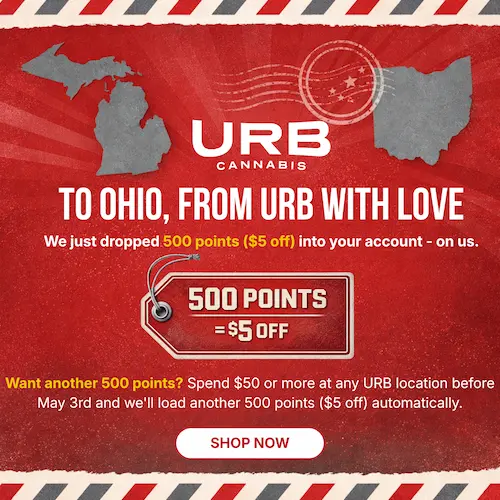
Ohio · Announcement · "To Ohio, From URB With Love" · 500pts
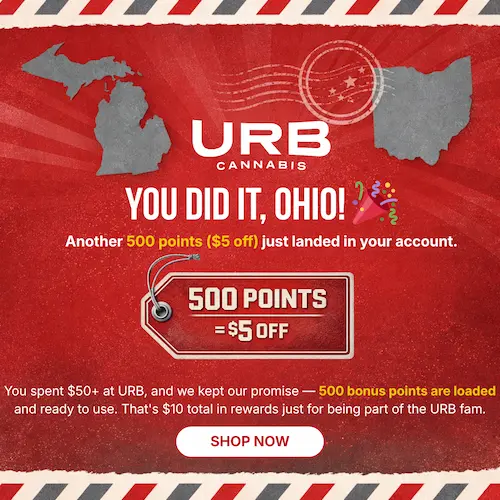
Ohio · Confirmation · "You Did It, Ohio!" · +500pt bonus

Monroe · Announcement · "We Feel Your Pain" · 250pts

Monroe · Confirmation · "You Did It, Monroe!" · +750pt bonus
Refer-a-Friend Program · 360 Launch
Built the URB RAF program inside AlpineIQ — automated tracking, fraud guardrails, and unique referral links per wallet. Launched it with a coordinated 360 campaign: in-store assets, online creative, email blast, and a permanent slot in the welcome series so every new customer gets exposed.
Built right, launched loud
500 points to each side — $5 off for the referrer, $5 off for the friend — triggered when the friend's first purchase clears $10. Automated end-to-end through AlpineIQ.
The 360 launch hit four channels at once: in-store signage and budtender talk tracks, on-site banners, a dedicated email blast, and a permanent block in the welcome series so it's the first thing every new URB wallet holder sees.
✓Automated tracking + payout — no manual reconciliation.
✓Fraud guardrails — unique wallet-linked codes, purchase-threshold trigger.
✓Maximum exposure — email · in-store · online · welcome series.
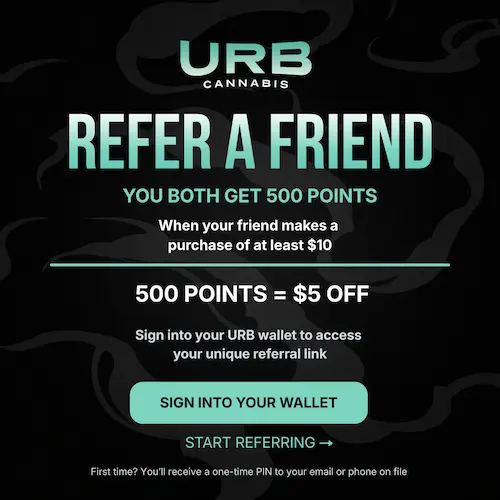
RAF awareness · email blast launch